


10.26.26
Cleaning, Sanitizing and Disinfecting: What’s the Difference?
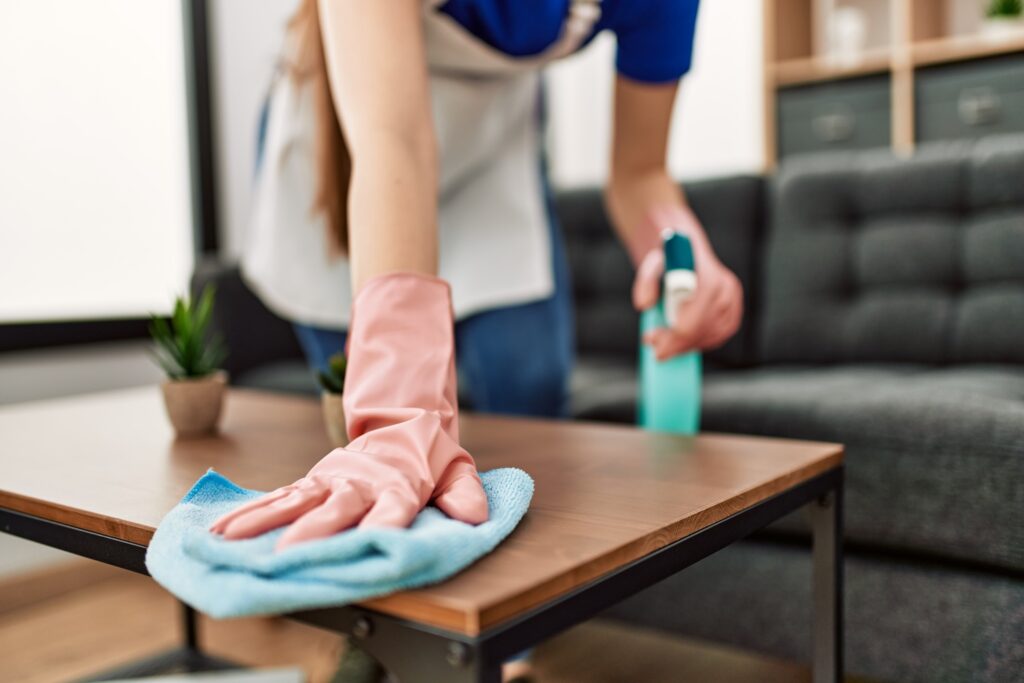

A simple guide to removing and killing germs.
As cold and flu season advances, it’s a good time to review how to reduce the spread of germs around your home. But what’s the difference between cleaning, sanitizing and disinfecting? Here’s what you need to know about clearing germs from your home.
Cleaning is just the first step
Cleaning with soapy water is rewarding because you see when dirt and grime are removed. Although cleaning removes most germs, it doesn’t necessarily kill them. Even with scrubbing and rinsing some might remain, but this doesn’t mean you should skip cleaning. The CDC recommends always cleaning before sanitizing or disinfecting.
It’s worth noting that vinegar can be an excellent cleaning agent but it is not a sanitizer or disinfectant. “Vinegar can kill some germs when it is on an item’s surface for a long enough time, but it does not kill all germs,” says the CDC.
Sanitizing reduces germs to safe levels
Sanitizing goes beyond cleaning to reduce germs to a level that’s considered safe. Weak bleach solutions, sanitizing sprays and heat are the most common sanitizing agents.
If using bleach to sanitize, use these measurements for dilution from Michigan State University Extension:
| Water | Bleach
Strength* 2.75% |
Bleach
Strength* 5.25-6.25% |
Bleach
Strength* 8.25% |
| 1 gallon | 1 tablespoon | 2 teaspoons | 1 teaspoon |
| 1 quart | 1 teaspoon | ½ teaspoon | ¼ teaspoon |
*Use only plain, unscented bleach that lists the percent (%) sodium hypochlorite strength on the manufacturer’s label. Read the label on the bleach bottle to determine the bleach strength. For example, “Sodium Hypochlorite….6.25% or 8.25%.”
When making a bleach solution, use cool water and add the bleach to the water. Don’t add water to bleach. Only mix what you need for the day, as bleach solution won’t be as effective when mixed with water for over 24 hours.
Sanitizing with weak bleach solution requires allowing the solution to remain in contact with the surface for at least one minute.
For dishes and other heat-safe items, a dishwasher with a sanitizing cycle is a convenient option.
Heat-safe items may also be placed in a pot of boiling water for five minutes. Check the manufacturer’s label first to make sure heat sanitation is appropriate.
For laundry, follow garment care labels and your washing machine’s instructions. Hot water, high dryer heat, chlorine bleach, hydrogen peroxide and commercial sanitizers can be used to eliminate germs when used as directed. Not every fabric can tolerate high heat or bleach.
Disinfecting kills germs
Disinfecting kills germs that remain on surfaces after cleaning. It’s especially useful when someone in your home is sick, or if someone has a weakened immune system and is at higher risk of getting sick.
Products designated as EPA-registered disinfectants or stronger bleach solutions are used for disinfecting.
Match the product to the surface you’re treating and follow product instructions to make sure you get their full benefit. For example, when using Lysol disinfecting spray, surfaces must remain wet for three minutes and then be allowed to air dry to kill viruses and bacteria.
When using bleach as disinfectant, Michigan State University Extension recommends the following solutions:
| Water | Bleach
Strength* 2.75% |
Bleach
Strength* 5.25-6.25% |
Bleach
Strength* 8.25% |
| 1 gallon | 1/3 cup, plus 1
tablespoon
|
3 tablespoons
|
2 tablespoons
|
| 1 quart | 1½ tablespoons
|
2¼ teaspoons
|
1½ teaspoons
|
*Use only plain, unscented bleach that lists the percent (%) sodium hypochlorite strength on the manufacturer’s label. Read the label on the bleach bottle to determine the bleach strength. For example, “Sodium Hypochlorite….6.25% or 8.25%.”
Allow surfaces cleaned with bleach solution to remain wet for at least five to ten minutes to disinfect against bacteria and viruses.
Bleach solution can be used to disinfect many common surfaces where germs are often found, including: handwashing sinks, toilet bowls and seats, potty chairs, soap dispensers, door and cabinet handles, and diaper changing tables.
Never mix cleaning products
Bleach and acids are common ingredients in cleaning products. When used as directed, they’re safe but mixing them is very dangerous. Here’s why: mixing bleach with acids or ammonia can release dangerous gasses. Exposure to these gasses can irritate or burn the eyes, nose, throat or lungs. Severe exposure can cause coughing, chest pain, difficulty breathing and potentially life-threatening injury.
If you accidentally mix cleaning products and experience symptoms, move to fresh air immediately and seek medical advice. If someone collapses, has a seizure, has trouble breathing or can’t be awakened, call 911. For other possible poison exposures, call Poison Control at 1-800-222-1222 for free, confidential help, available 24/7.
Handwashing is one of the simplest ways to help prevent illness
Washing your hands with soap and water helps remove germs that can spread between people and from surfaces to people. The CDC recommends these five steps:
- Wet your hands with clean, running water (warm or cold), turn off the tap and apply soap.
- Lather your hands by rubbing them together with the soap. Lather the backs of your hands, between your fingers and under your nails.
- Scrub your hands for at least 20 seconds. Need a timer? Hum the “Happy Birthday” song from beginning to end twice.
- Rinse your hands well under clean, running water.
- Dry your hands using a clean towel or an air dryer.
Don’t skip drying. Germs can transfer more easily to and from wet hands.
If soap and water aren’t available, use an alcohol-based hand sanitizer containing at least 60% alcohol. Hand sanitizer can reduce many germs but doesn’t eliminate all types. Whenever possible, wash your hands with soap and water.
Federally insured by NCUA