


5.22.26
Benefits of Hiring Veterans

Consumers business services
Do you have business banking questions? Contact our knowledgeable commercial loan officers.
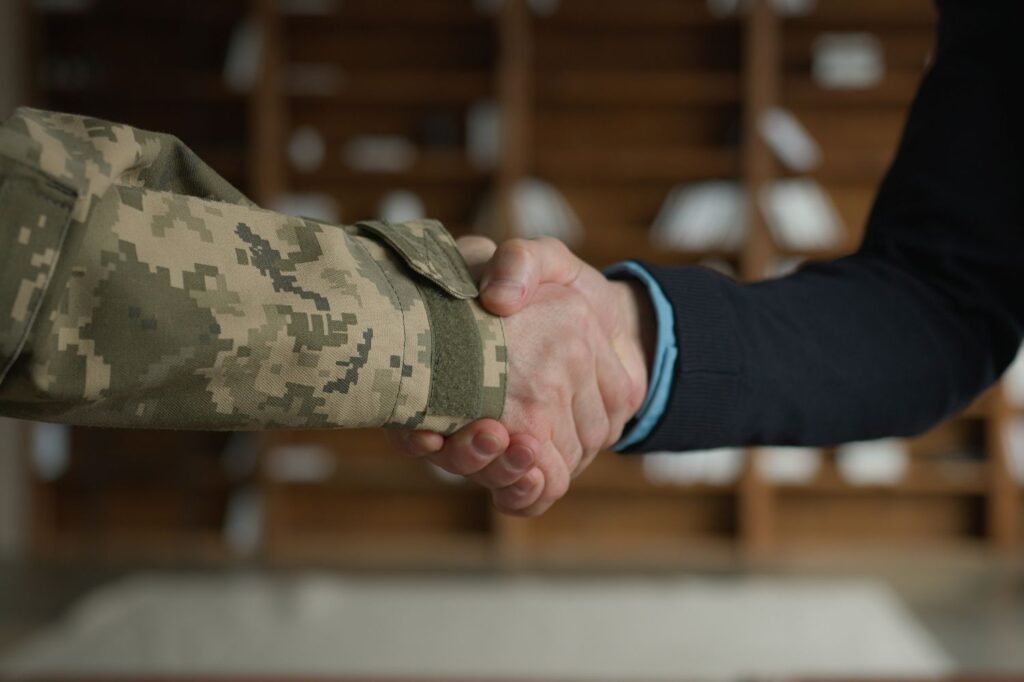
Military veterans and military spouses bring valuable skills to the workplace.
Do your recruiting efforts include reaching out to military veterans and their spouses? If not, you may be missing out on a talented pool of workers.
Leadership tops the list of skills veterans have
One of the most valuable skills veterans bring to the workplace is leadership. This doesn’t mean the only jobs they seek are in management; rather, their expertise as leaders makes them accountable, effective mentors and proactive team members. Veterans also understand the power of teamwork, adaptability and problem-solving.
A hidden pool of talent: military spouses
Another talent pool employers often overlook is the spouses of military members and veterans. Hiring Our Heroes, part of the U.S. Chamber of Commerce, reports that military spouses often display dedication, resilience and flexibility both in and out of the workplace.
In addition, military spouses have high levels of cultural sensitivity and awareness and are more highly educated than the average American. Over one-third have a bachelor’s degree, and 15% hold a postgraduate degree.
Learn more about attracting and retaining military spouses here.
How to attract veterans
Job descriptions can be a barrier for service members even when they are well qualified for many positions. Using key phrases such as “ability to work in teams,” “supply chain and logistics” and “strategic planning” signals to veterans that they are qualified. See a complete list of key phrases for job responsibilities here.
Understand how military rank relates to education
When receiving a resume from a veteran, civilian employers need to understand how military rank relates to the applicant’s education and experience level. Hiring Our Heroes provides this summary of some of the most common ranks:
- Junior Enlisted/E-1, E-2, E-3, E-4
These are entry-level positions that grow into technicians in their fields. They have a high school diploma, are individual contributors and will get the opportunity to lead or supervise a small team. They receive technical training and introductory leadership training. - Non-Commissioned Officer (NCO)/E-5, E-6
NCOs are strong technicians who have advanced technical training as well as leadership training. They will manage or supervise small teams and direct day-to-day work activity. Generally, NCOs will be in the process of getting college degrees. - Senior Non-Commissioned Officer (SNCO)/E-7, E-8, E-9
These are experienced people managers and technical experts, most of whom have college degrees and are mentors to junior officers. They manage leaders who manage teams. They set work priorities for teams to achieve mission success.
You can see more rank-to-education equivalencies in this guide from Military Friendly.
Supporting those who serve
Hiring veterans and military spouses not only supports those who have served their country but also helps organizations gain talented employees who contribute valuable experience, teamwork and leadership skills.
Check out the Veteran Hiring Handbook for a comprehensive view on how veterans improve businesses, tips on hiring, onboarding, and working with veterans.
Federally insured by NCUA
Consumers business services
Do you have business banking questions? Contact our knowledgeable commercial loan officers.