


9.1.26
What Happens if a Financed Car Is Totaled?
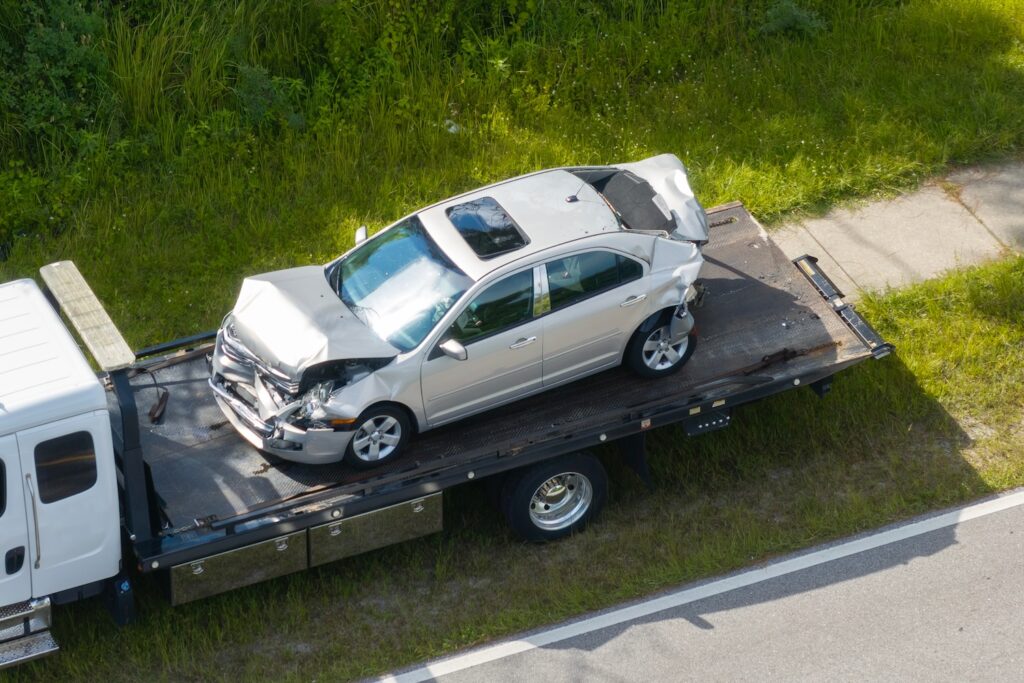
Payments need to be made until the loss is fully settled with your insurer and lender.
If your car is so damaged that the insurance company declares the vehicle a total loss, what happens if you still have a balance on the loan? We hope this never happens to you but if it does, here’s what you need to know.
Understanding terms related to a totaled car
When an insurance company totals a car it means that the cost of making repairs is higher than the car’s actual cash value (ACV). A car can be totaled due to an accident, fire, flood, theft or vandalism.
ACV is what the fair market value of the car would have been immediately before damage or theft. It accounts for the vehicle’s make, model, age, mileage and wear and tear.
Salvage value, sometimes called scrap value, is what a salvage yard will pay for the vehicle.
Keep up with payments
If your car is totaled, loan payments need to be made until the loss is fully settled with your insurer and lender.
Generally, the financial part of the settlement process works like this:
- The insurer determines the vehicle’s ACV.
- Your lender lets you and the insurer know how much remains on the loan.
- If ACV is greater than what’s owed, the lender gets a check to cover the loan balance and you get the remaining funds.
- If ACV is equal to what’s owed, the lender gets the full amount.
- If ACV is less than what’s owed, you must pay the difference. This is called being under water.
- If you want to keep the totaled car, the lender must agree to it. The insurance company will pay out ACV minus salvage value, and you would need to pay remaining loan balance immediately.
If the insurance settlement doesn’t cover the cost of the loan, there are several ways to pay off the remaining balance, depending on what the lender agrees to. You may be able to continue with monthly payments, roll the debt into a new car loan, or convert the debt to a personal loan.
Failure to pay back the loan will have a negative effect on your credit score and ability to get future loans.
Avoid the financial hit of a gap between car value and loan balance
If your loan balance is higher than what your car is worth, gap insurance provides protection from being under water and having to pay off the loan on a totaled car. Gap insurance can be added to many auto insurance policies, and coverage can be as low as $40 a year. Some auto dealers and lenders offer gap insurance but their premiums will likely be higher than those offered by an auto insurer.
When you’re ready to buy your next car
Whether you replace a totaled car with a new or used vehicle, turn to Consumers for an auto loan at a great rate.
All loans subject to approval. Rates, terms, and conditions are subject to change may vary based on credit worthiness, qualifications, and collateral conditions.