


6.8.26
When Should You Stain a Deck?
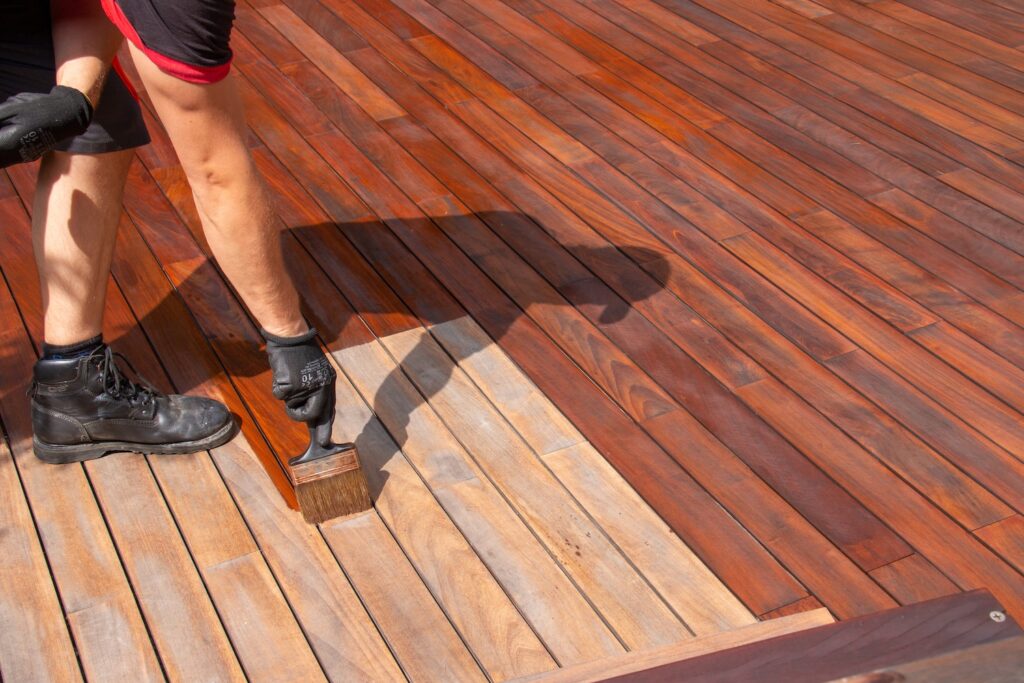

Signs a deck needs fresh stain, and when to stain a newly built deck.
Decks provide the perfect place to enjoy nature. You’re outside, but the surface underfoot is even and clean. With comfortable seating, tables and perhaps a grill, a deck extends living spaces and provides a place to gather. For the most part, decks are low maintenance, but this doesn’t mean no maintenance. From time to time, they need to be sealed or stained.
Deck stains have pigments, while deck sealers are colorless. Both protect wood from moisture while stains offer additional protection by blocking UV light. For simplicity, we’ll just refer to stains for the rest of the article.
Signs it’s time to stain an existing deck
Decks typically age slowly and there’s no clear point when they need a fresh coat of stain. However, there are signs that stain is no longer doing its job of protecting the wood. Faded or peeling stain means it’s time to re-stain your deck. Another sign is if water absorbs into the wood instead of beading on the surface.
Depending on how much exposure a deck has to the elements of sun, rain and snow, staining may be needed every two to three years.
When to stain a newly built deck
While it may be tempting to stain a newly built deck right away, it’s best to wait two to three months when using pressure-treated wood. A brief period of exposure to the elements will remove mill glaze, tannins and excess moisture from the surface; these three factors prevent stain from penetrating the wood. Mill glaze is a film created by heat when the boards were cut. Tannins are water-soluble compounds that are naturally present in tree sap.
New wood should dry to the point where the moisture content is 12% to 15% or less. This can be accurately measured using a digital moisture meter. A less precise method is the DIYer’s black bag method. Cut a 12” x 12” piece of plastic from a black trash bag and tape it on the new wood in a sunny area. Make sure all the edges are sealed. After four to six hours, lift the tape and plastic. If there’s condensation on the black plastic, the wood requires more drying time.
It’s worth it to keep up with deck staining because it extends the life of your deck, which helps save money, enhances your outdoor space and can help boost your property value.
Federally insured by NCUA